
New Hartford City Directory Collections
New Hartford does not have a separately located city-directory run in the official sources reviewed. Instead, the Utica Public Library directory gateway identifies Utica-area volumes that explicitly include New Hartford and nearby communities. Those city directories are strongest for a dated name, occupation, business location, street, residence notation, and nearby entries. They are not a current occupancy list. Search the alphabetical, street, and classified portions separately when the volume provides them.
| Collection | Years | Where held | Access |
|---|---|---|---|
| Utica city directories | 1869–70, 1870–74, 1876, 1892–99, 1902, 1905–09, 1911–12, 1914–17, 1919–21, 1923–24, 1926–28, 1930–33, 1935–43, 1945, 1947–49, 1951 | Utica Public Library | Many digitized scans; review page images. |
| R. L. Polk Utica directory | 1913, 902 pages | FamilySearch catalog and viewer | Digitized volume including New Hartford and nearby places. |
| Regional newspapers, manuscripts, directories | Dates vary | Oneida County History Center | Research inquiry for retrieval and copies. |
| Church and cemetery records | Exact local runs vary | NYG&B, repositories, churches, FamilySearch | Use to test a directory identity. |
For every New Hartford city directory hit, retain the printed title, publisher, year, page, section, exact spelling, occupation or business, street or intersection, residence notation, and adjacent names. The gateway is a scan route, not proof that every listed volume is fully indexed.
Utica Series for New Hartford City Directories
The Utica series is the central shelf for New Hartford city directories. Its breadth makes a year-by-year household trail possible, but the gaps matter. A person may appear in one issue, vanish in the next, and return under a different label or spelling. New Hartford separated from Whitestown in 1827, the village incorporated in 1870, and later annexations affected Utica labels. Test New Hartford, Utica, Whitestown, Deerfield, Chadwicks, and Washington Mills when a first search fails.
The 1913 FamilySearch directory viewer identifies R. L. Polk and Company as creator and confirms the 902-page volume’s New Hartford-inclusive scope.
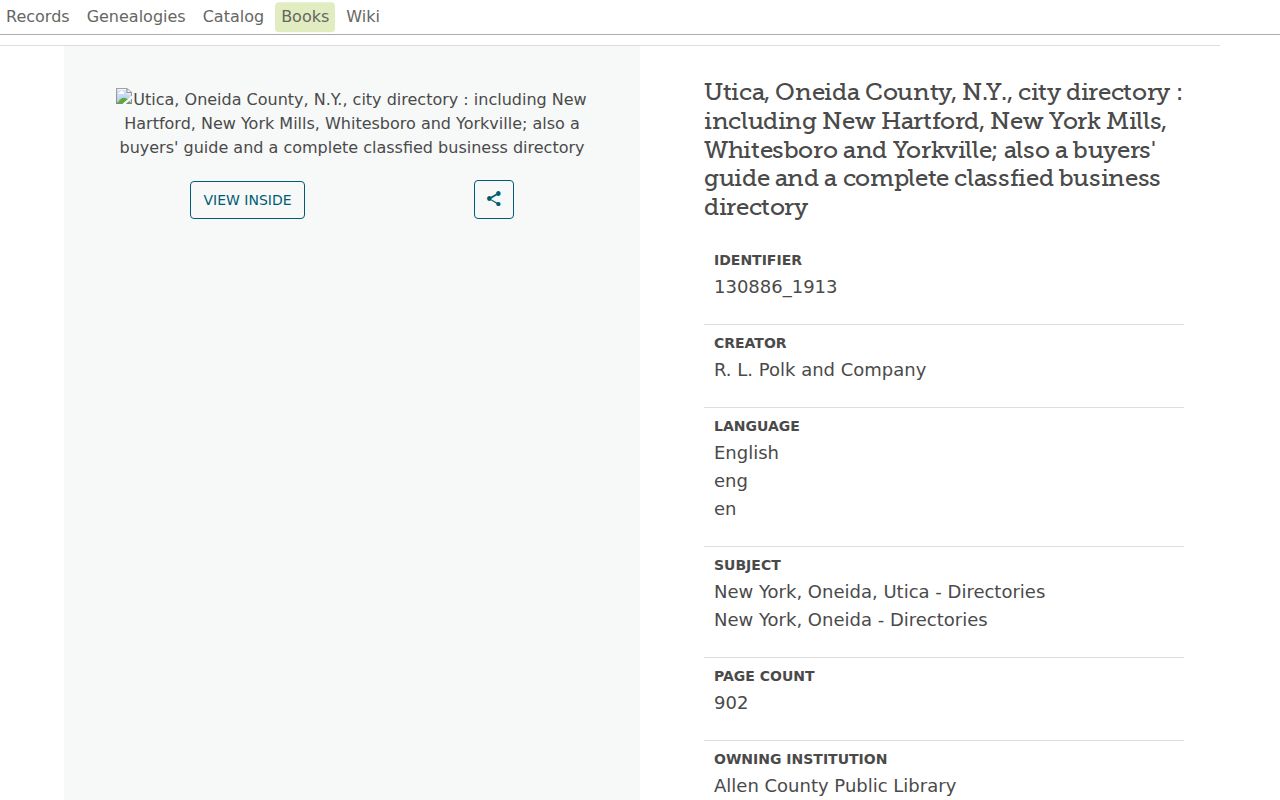
Use the page image and its printed locality before treating a catalog result as evidence of residence.
Reading New Hartford City Directory Entries
A New Hartford city directory is a period record. The 1858–59 transcription places William S. Jackson’s butcher business at Genesee and State while noting residence in New Hartford. That split ties a person to two locations without claiming they were the same address. The research also records period conventions such as res, h, and bds. Confirm each mark in the abbreviation key of the actual volume, because formats can vary.
| Name | Exact spelling, initials, and any spouse or household notation printed. |
|---|---|
| Occupation or business | A trade, employer, shop, or business location that can distinguish same-name people. |
| Street or intersection | A residence, business, boarding, or intersection clue, not automatically a modern address. |
| Residence notation | Period shorthand such as res; preserve it and check the volume key. |
| Page context | Edition year, page, section, neighboring entries, and whether the source is a scan or transcription. |
- Criss-cross directory
- A directory arranged by street and address rather than surname. No separately catalogued New Hartford run was located, so check street sections within the Utica volumes.
- Householder index
- A surname index that identifies a household lead when a volume includes one. It does not prove everyone at the address was listed.
- Abbreviation key
- The volume’s explanation of shortened marks. Capture it before interpreting h, res, or bds.
Note: A transcription is a useful lead, but the original scan or printed volume is the best check for a directory detail.
New Hartford City Directory Library Access
Utica Public Library is the first stop for a named New Hartford city directory year. Its genealogy route lists the New Hartford-inclusive scans and offers a library channel when a viewer, page, or hamlet label is hard to locate. Ask for the exact year, volume, page range, and confirmation that New Hartford is included. The library is at 303 Genesee Street in Utica and can be reached at 315-735-2279. That is more useful than assuming a listed year contains every local place.
The library’s directory-year list is the primary reference for this historical directory shelf.
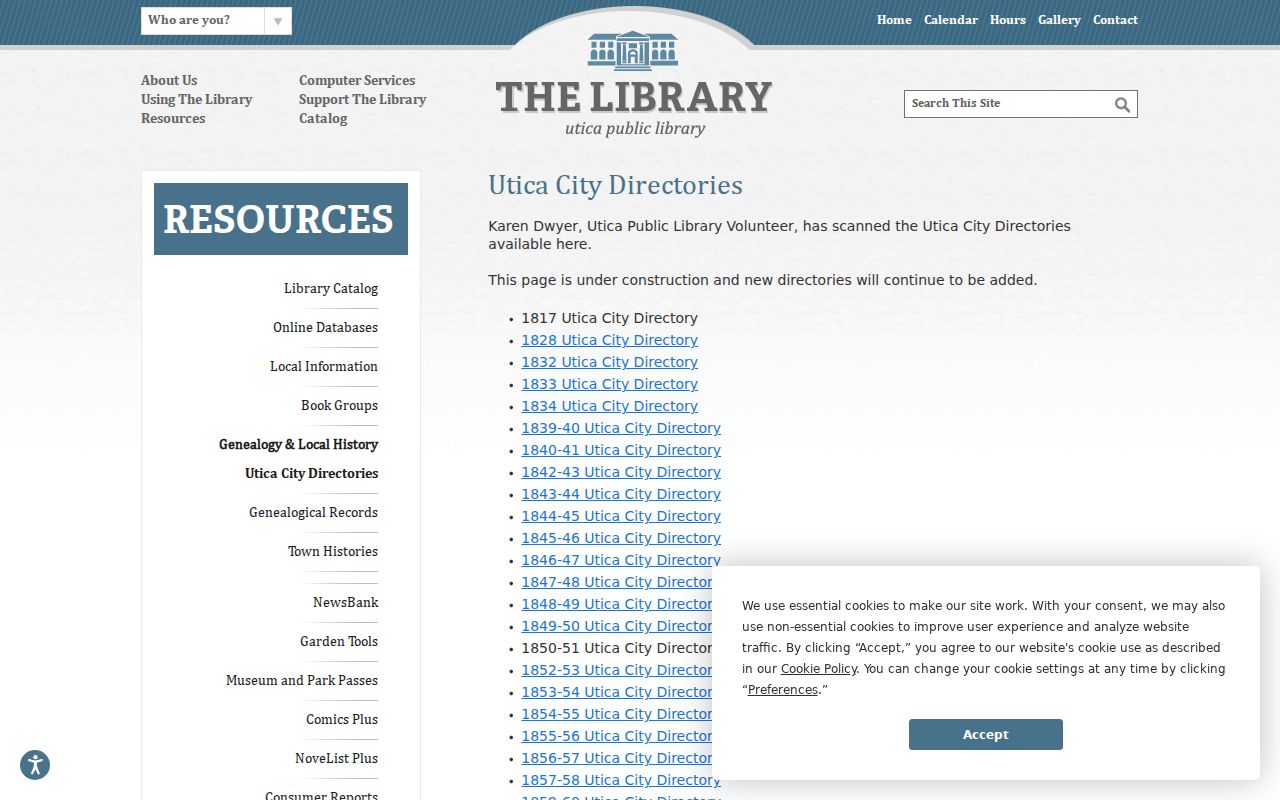
The image shows the gateway context, while the individual scan and page provide the citation needed for a household finding.
New Hartford Public Library offers a second local-history channel through NY Heritage projects that document local industries and historic images. Image captions and collection IDs can identify a building or business named in a city directory.
The New Hartford Public Library NY Heritage entry identifies its Industries of Old New Hartford and Community Historic Images projects.
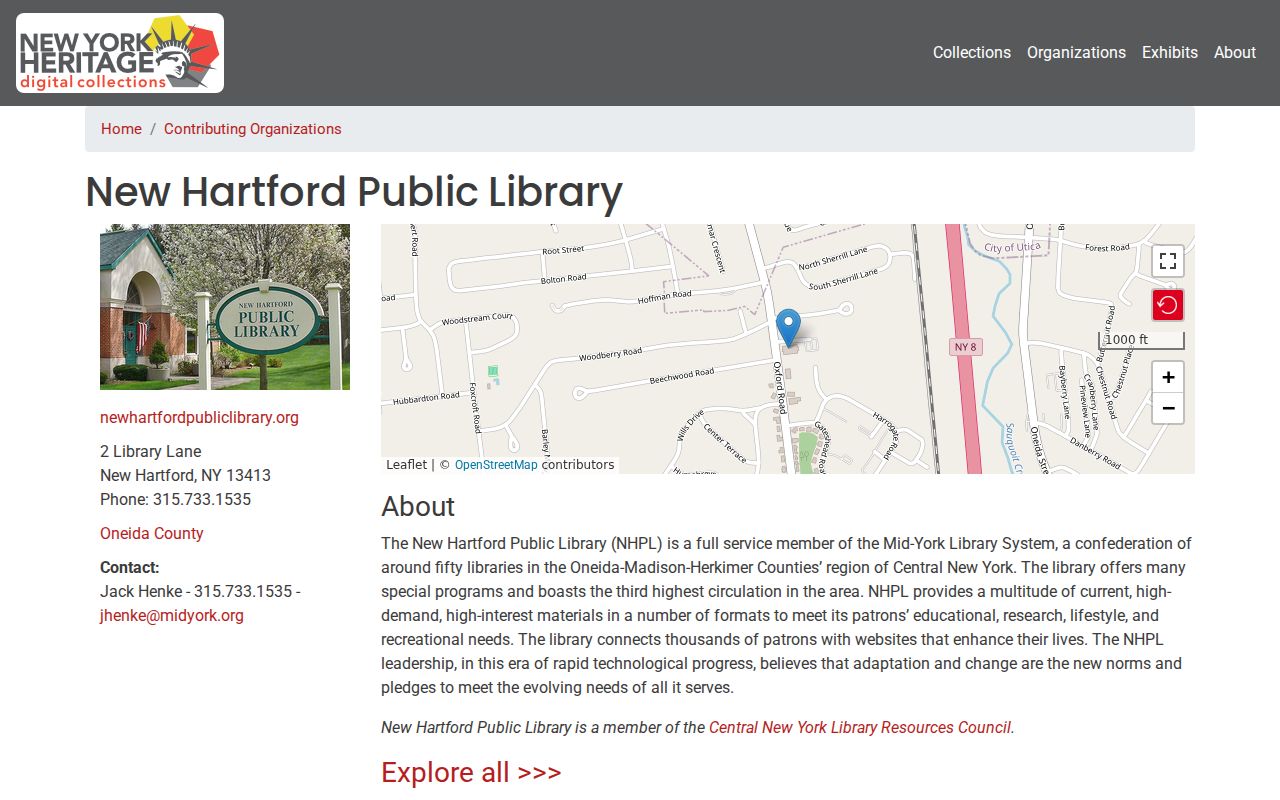
Keep the collection title, date, caption, and item identifier with the directory citation.
New Hartford City Directory Place Labels
New Hartford city directories require more than one place-name search. Historical sources may use the town, village, postal city, Chadwicks, Washington Mills, or a nearby community name. A household can appear under a municipal label that does not match a modern map. Keep the original printed label, then compare a street, occupation, household member, or cemetery record before merging names.
| 1827 | New Hartford formally separated from Whitestown. |
|---|---|
| 1870 | The Village of New Hartford incorporated. |
| 1913 | The R. L. Polk Utica volume included New Hartford and nearby communities. |
| 1921, 1922, 1925 | Utica annexation changes can affect city and town labels in historical comparisons. |
Federal census records are public through 1950, while available New York state census years include 1825, 1835, 1855, 1865, 1875, 1915, and 1925. The 1845, 1892, and 1905 state series are identified as lost. A missing result should remain a gap rather than become a conclusion.
Trace New Hartford City Directory Households
Use a New Hartford city directory to create a dated household trail, then test it against records built for a different purpose. Directories can show movement, a trade, or a boarding notation, but cannot by themselves prove a full household relationship. Census records offer household and age context; church, cemetery, and newspaper material can help explain a disappearance. For a present-day parcel comparison, use the New Hartford street directory rather than treating an old listing as a parcel match.
- Find the earliest likely surname or business entry and record the year, page, exact place label, and spelling.
- Follow the name through later New Hartford-inclusive directory years, recording addresses, occupations, and notation changes.
- Check street, address, classified, and business portions where the volume provides them.
- Pair a directory date with the closest census, using age, birthplace, street, and household members to separate similar names.
- Use church, cemetery, obituary, or newspaper evidence to test whether a disappearance reflects death, a move, a changed label, or a non-listing.
New Hartford directories sometimes lack an expected person because coverage varies, the household used a nearby label, or the entry was not indexed. Keep a negative search with its edition and place labels. It documents what was checked without proving absence from town.
New Hartford City Directory History Resources
The New Hartford Historical Society connects Genesee Street, Oxford Road, Campion Road, Sauquoit Creek, Middle Settlement, and Washington Mills to documented local places. The Society works from the lower level of Village Point Apartments at 2 Paris Road by appointment. Its early-settler, village, church, school, industry, and walking-tour materials are useful when a city directory names an old road, mill, church, or surname but gives little context.
The New Hartford Historical Society provides local place-name context for a city directory entry.
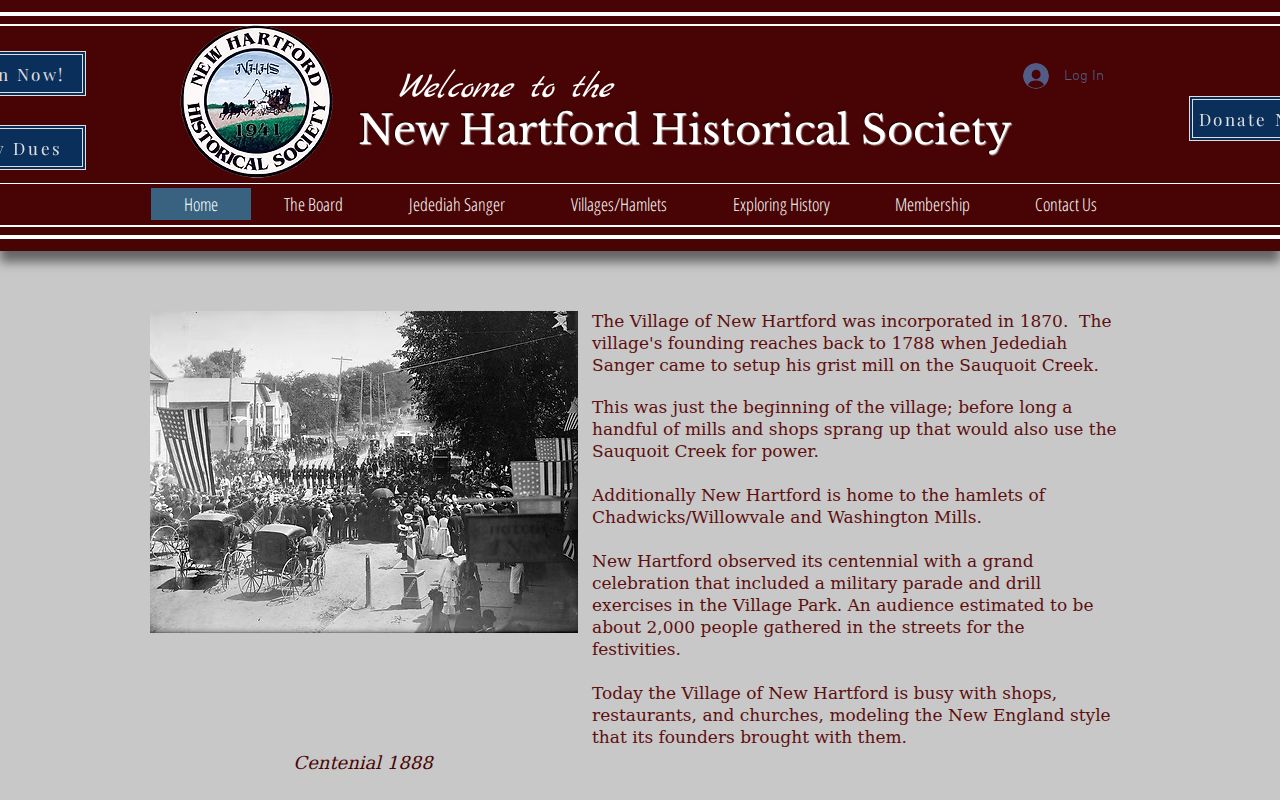
Retain a Society finding with its page title, source date, and the directory citation it helps interpret.
The Historical Society early-settlers index supplies surname variants that can broaden a city directory search without acting as a modern resident list.
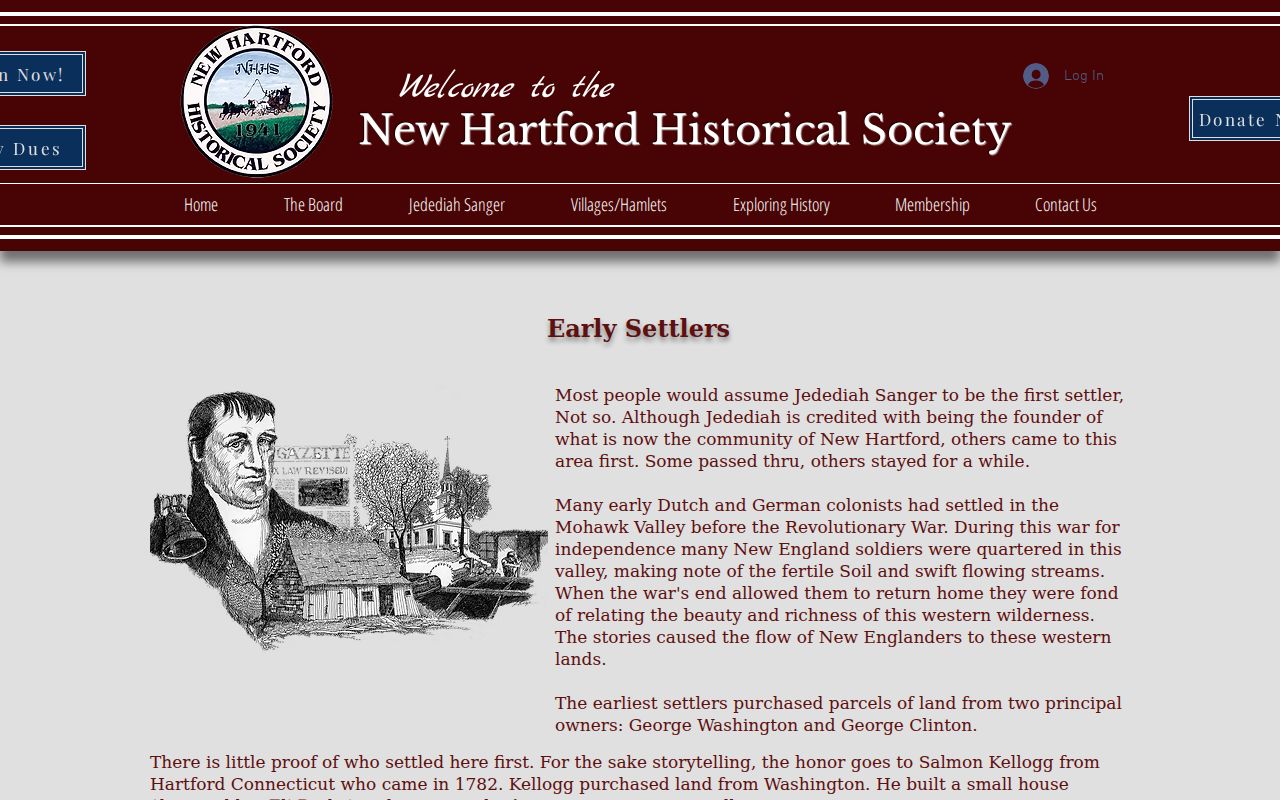
Early names such as Kellogg and Sanger are archive-search variants that need a dated directory, census, deed, or church record before an identity is accepted.
New Hartford City Directory Archive Checks
Oneida County History Center adds the regional archive layer: newspapers, photographs, artifacts, manuscripts, directories, and New Forest Cemetery material. Its research library at 1608 Genesee Street in Utica is a useful fallback when a digitized New Hartford city directory is incomplete or an entry needs independent context. Ask for the collection title, date span, geographic scope, item or box identifier, reproduction terms, and whether an item is an original, scan, transcription, or index.
The Oneida County History Center research page describes the regional holdings and research route.

Newspaper and cemetery details can corroborate a directory identity when an old town, village, or business label conflicts with a modern address.
Note: The Old Burial Grounds at Oxford and Daly began with a 1795 burial, and relocation during a 1952 school addition can leave cemetery references incomplete or under a different institution.
For a directory year between census releases, consult the regional archive path rather than filling the gap from a modern database. The National Archives identifies Utica directory coverage that includes New Hartford and neighboring communities around 1930. New York State Archives and FamilySearch are the principal routes for state census, federal census, naturalization, and catalog research. A request should name the directory year, the exact place label, the surname variants, and the street or trade already found. That gives the librarian or archivist a dated, repeatable search rather than an unsupported request for every reference to a person.
Federal census material is public through 1950. New York state census runs available for Oneida County include 1825, 1835, 1855, 1865, 1875, 1915, and 1925, while the 1845, 1892, and 1905 series are identified as lost. Recording the missing run prevents a gap in a New Hartford city directory trail from being mistaken for proof of a move.